Generation 1 changeable-TID UHF RFID
Generation 1 wet inlay · 100 × 15 mm
Generation 1 white card · 110 × 30 mm
Special-purpose Generation 1 and 2 changeable-TID UHF RFID wet inlays, dry inlays and white cards for authorized short-range testing, plus a companion reader/writer.
CHANGEABLE-TID PRODUCT FAMILY
Special-purpose experimental tags with supported TID programming. These are not standard factory-permalocked TID tags; sample testing with the buyer's actual reader is required.
Generation 1 wet inlay · 100 × 15 mm
Generation 1 white card · 110 × 30 mm
Generation 2 dry inlay · 80 × 45 mm
Generation 2 white card · 85 × 54 mm
A matching reader/writer for reading and writing EPC and TID data through supported Windows and Android systems.
SELECT PRODUCT
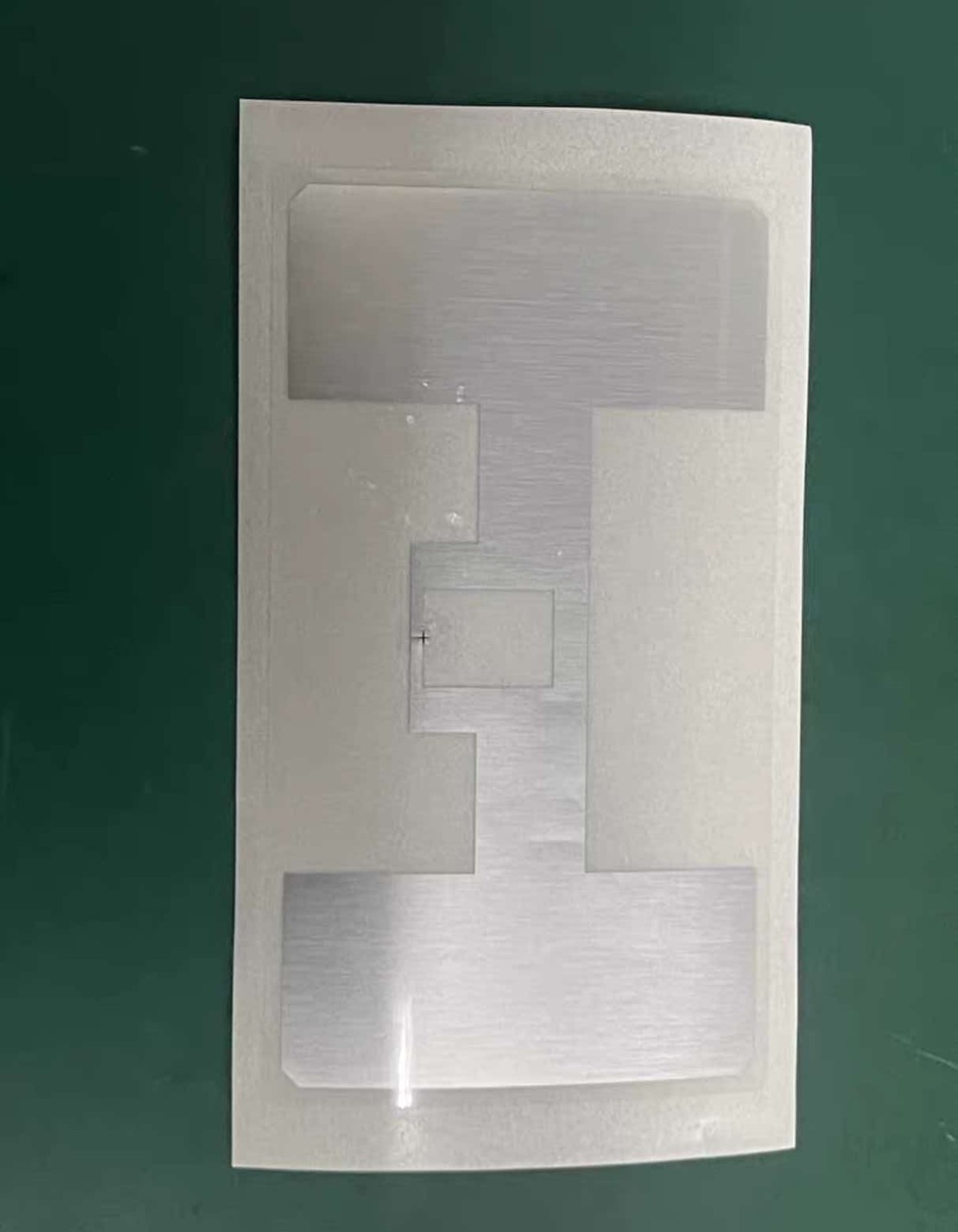
A special-purpose 80 × 45 mm dry inlay for supported EPC and TID programming in authorized engineering and integration tests. High-power reader and sample validation required.
TECHNICAL OVERVIEW
These special-purpose experimental tags support defined EPC and TID programming workflows while communicating over UHF EPC G2 / ISO 18000-6C. Buyers must validate exact memory behavior and short-range performance with samples.
Program EPC and supported TID data in authorized workflows; confirm the exact writable range by sample test.
Use the companion device with supported Windows or Android systems to read and write EPC and TID.
Evaluate the complete setup under the actual antenna, mounting surface, orientation, and RF environment.
* Read range is not guaranteed at every installation. Actual performance depends on reader output, antenna, tag orientation, mounting material, interference, and local frequency rules.
AUTHORIZED APPLICATIONS
Authorized replacement and migration projects where identifier data must be provisioned for a controlled system.
Reader, middleware, firmware, and data-flow validation in a controlled R&D or QA environment.
Prototype and integrate programmable RFID behavior into an authorized product or solution.
Study EPC and TID behavior in legitimate teaching, interoperability, and research programs.
HOW TO ORDER
Tell us the product, quantity, destination country, reader environment, and authorized use case.
We confirm current availability, sample options, technical fit, lead time, and volume pricing.
After commercial details are agreed, the order is prepared for delivery within the confirmed schedule.
PRODUCT TERMINOLOGY
These are common technical descriptions for the same product family. Use the specification—not the wording alone—to confirm that the inlay and reader match your authorized workflow.
TECHNICAL ANALYSIS · ENGLISH PRIMARY
Three foundation articles build the technical argument; three practical guides cover memory choice, RF write margin and applications to avoid. Standards facts, vendor specifications, engineering inferences and supplier-reported data are labeled separately. English is the controlling technical version.
View the complete technical library ↗The four Gen2 memory banks, factory permalock, and the difference between EPC application data and TID identity metadata.
Read article ↗Why a familiar Gen2 reader workflow does not make a user-controlled TID-addressed value equivalent to a standard factory TID.
Read article ↗A repeatable test plan for memory persistence, reader power, write distance, orientation, mounting surface and acceptance criteria.
Read article ↗Choose the correct bank—or backend—for an inventory identifier, IC identity, auxiliary payload or mutable business record.
Read article ↗Why inventory can succeed where memory programming fails, with a practical explanation of sensitivity, RF margin and test method.
Read article ↗Concrete no-go scenarios for security, access, regulated traceability, portals, conveyors and mixed-reader systems.
Read article ↗BUYER FAQ
TID Labs supplies Generation 1 wet inlays and white cards plus Generation 2 80 × 45 mm dry inlays and white cards. Orders may ship from Shanghai, China, or Long Beach, California, USA, depending on stock and quotation.
It is a special-purpose experimental UHF RFID tag designed for supported TID programming. It differs from a conventional standard tag whose TID is assigned and locked at the factory.
A dry inlay is the antenna-and-chip assembly without a pressure-sensitive adhesive backing. A wet inlay normally adds adhesive and a release liner. This product is supplied as a dry inlay.
The product supports defined TID programming, but the exact writable range, commands, passwords and locking behavior must be confirmed with a sample and the intended reader.
No. The stated 0.1–10 m range depends on reader power, antenna, tag placement, mounting surface, orientation, interference, and local settings.
Yes, it is offered for supported Windows and Android read/write workflows. Exact connection and software details are confirmed during quotation.
Generation 1 is USD 8 per wet inlay and USD 11 per white card. Generation 2 is USD 10 per dry inlay and USD 15 per white card. The companion UHF RFID reader/writer is USD 40 per unit. Volume pricing, availability, and shipping are confirmed in the quotation.
MOQ and sample availability are confirmed by email. Delivery is planned within 30 days after order confirmation, subject to quantity and destination.
REQUEST A QUOTE
Fill in any details you want to share. Nothing is sent automatically—generate a clean inquiry, then copy it into an email to sales.